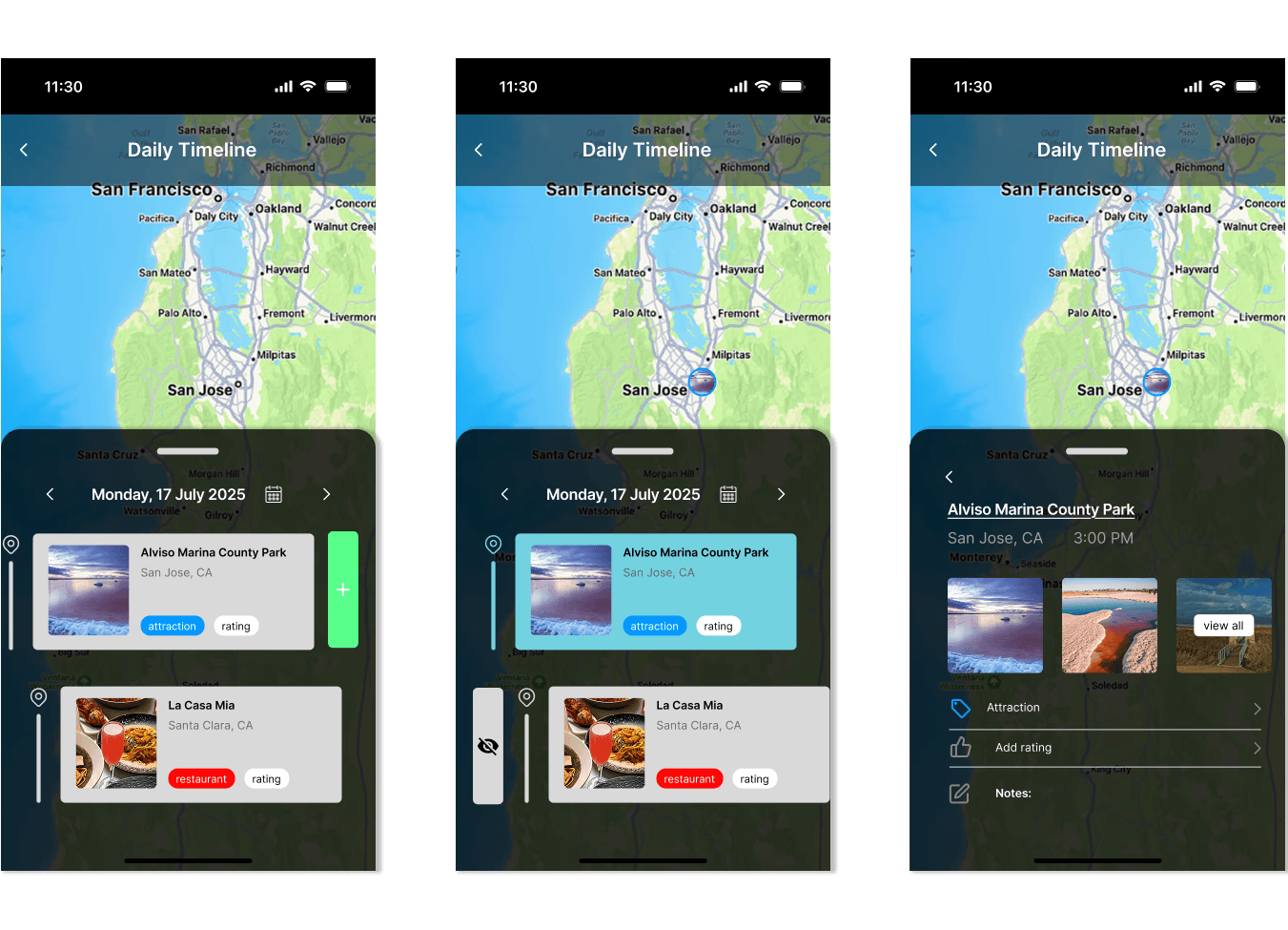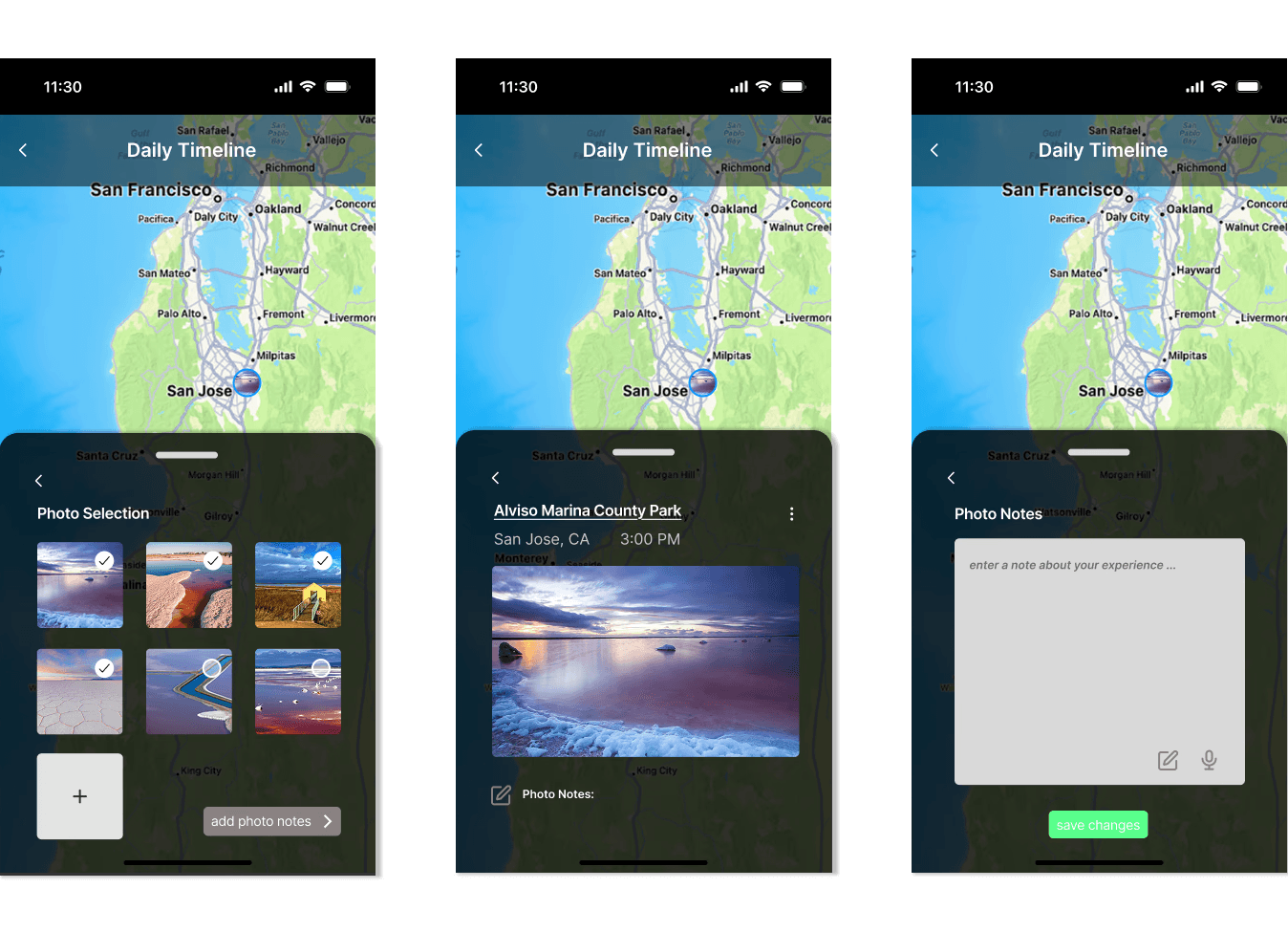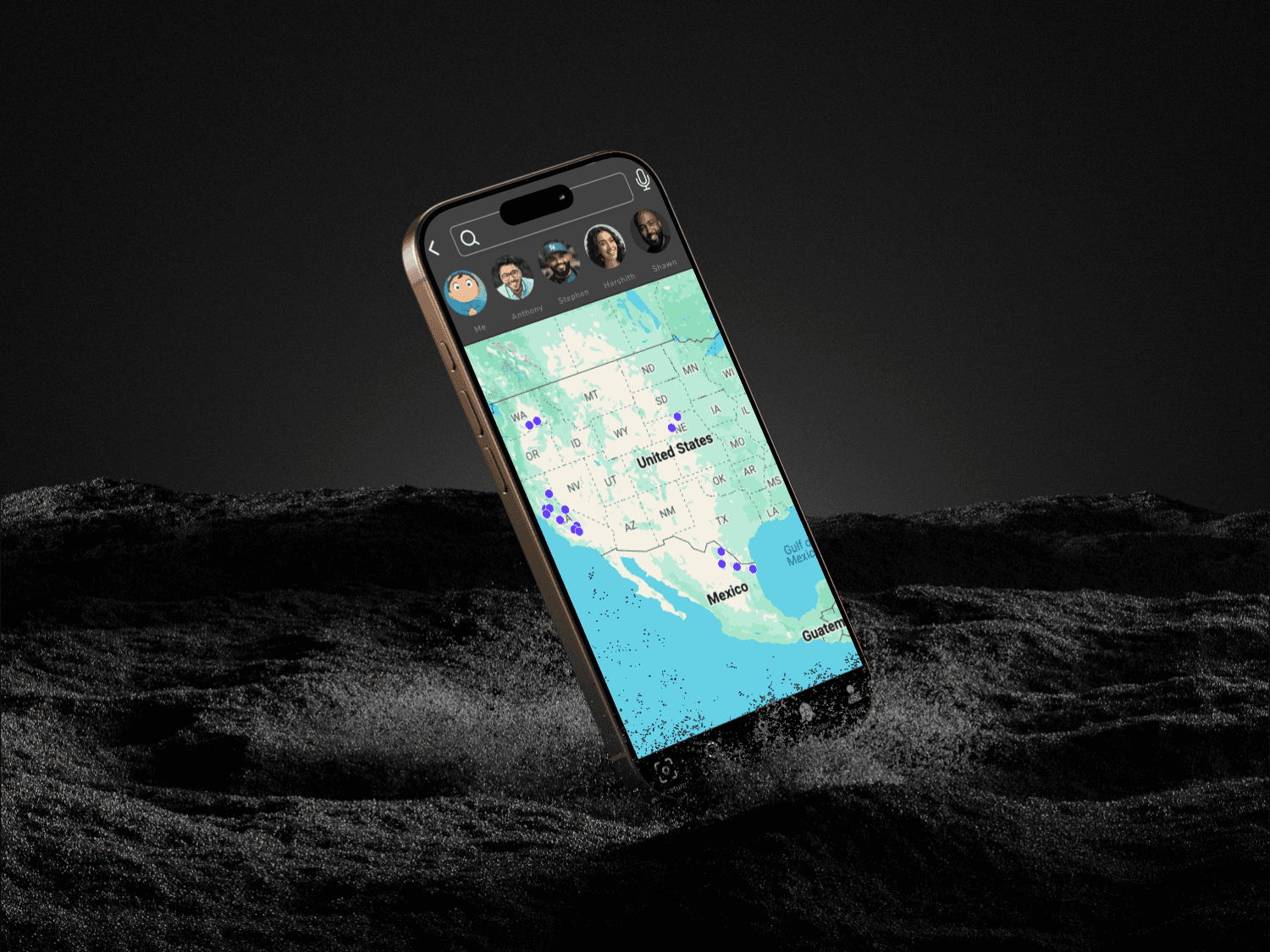
Project Summary
LinkedSpaces is a travel-focused social app that helps users create itineraries, plan trips, and log their experiences using photo metadata to quickly capture locations and memories. During my internship, I was tasked with creating a feature to enhance the user experience. Studio Mode enhances the user experience by providing a simpler, more intuitive way to log visited locations and capture memories, and high-fidelity designs were approved by the product lead and company leadership and are currently in development.
The Challenge
Travelers often lose track of their visited places due to disorganized photos, leading to frustration and wasted time when trying to recall meaningful experiences. This issue was especially common among beta testers of the LinkedSpaces travel app, who wanted an easier way to document and revisit their trips.
Within a 4-week timeframe, I designed the Studio Mode feature to enhance the user experience by creating a workspace where users can effortlessly organize, recall, and share their travel memories using the location data embedded in their photos.
User Needs and Potential Solutions
Based on research and beta testing with 10+ participants, we identified key user needs:
Clear Workspace: Dedicated section separate from the home feed, distinguishing drafts from published posts.
Intuitive Posting Flow: Straightforward steps to save locations, add details, and log memories.
Centralized Memory Management: Single, organized space to revisit and manage past posts.
Privacy & Control: Clear understanding of what is shared versus what stays private.
Streamlined Process: Simplifies recalling and recording memories for visited locations with photo metadata, making recommendations and logging faster and easier for users.
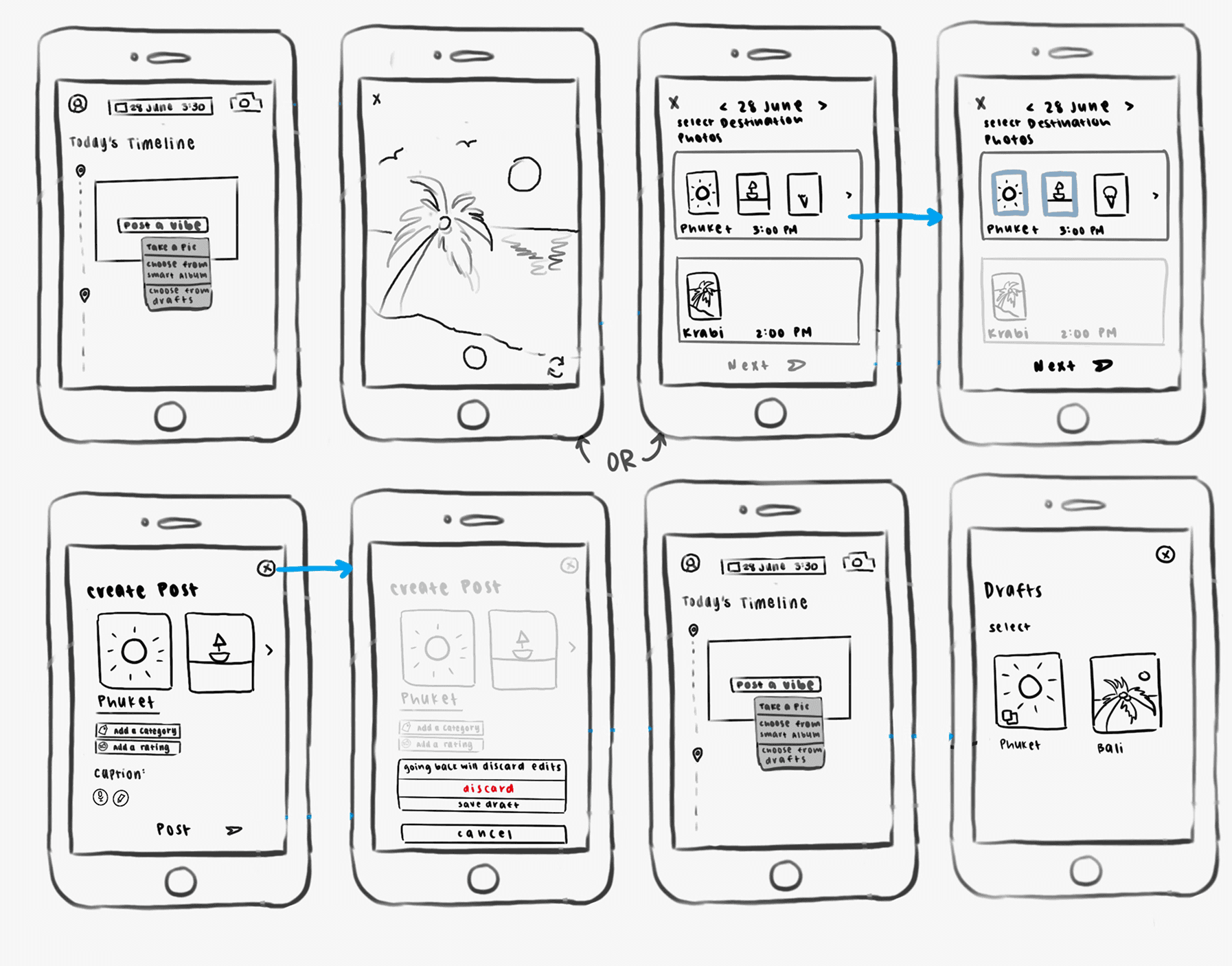
Mid and High Fidelity Designs
Mid-fidelity designs were iteratively refined based on feedback from the company owners and the professor from Yonsei leading the development side, with a focus on clarity, usability, and workflow. Key features include:
Dedicated Studio Mode workspace: A central area for users to log and organize memories of visited locations.
Posting flow screens: Step-by-step interface for saving locations, adding details, and sharing experiences.
After many meetings with the team of developers and the company owners, I began refining the designs into high-fidelity screens, preparing them for development handoff.